
Doing so much. Still feeling stuck?
Your life may look fine from the outside. Yet you’re overwhelmed, frustrated, or making little progress on something that matters to you.
At Applied Brain Lab, I use psychology and neuroscience to help you understand what may be happening - and practical tools to work out what you can do next
Gwen Bach · MSc Applied Neuroscience · Former therapist
15 questions to take stock, plus a practical writing exercise. Free PDF workbook.
GET THE FREE FEELING STUCK CHECK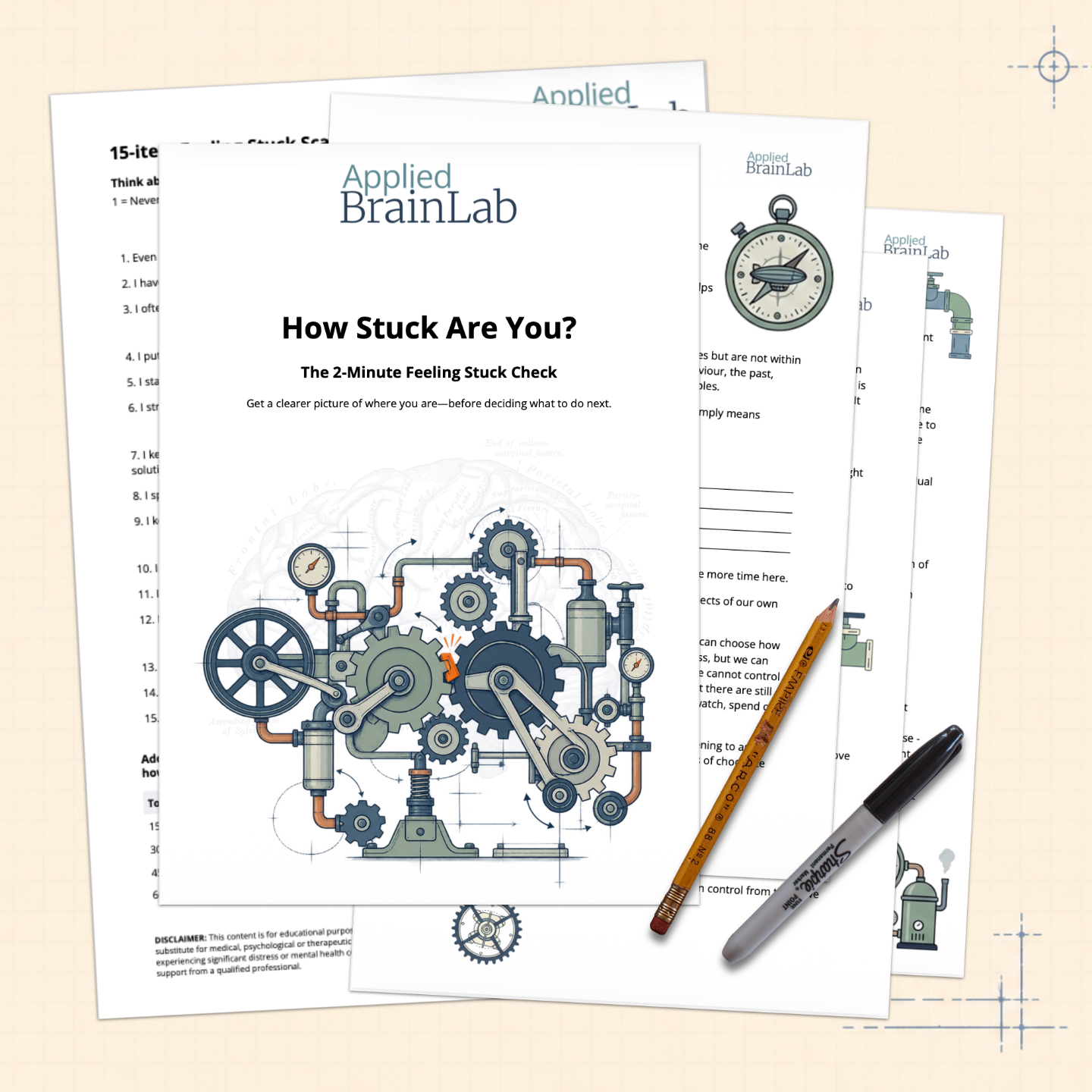
Feeling stuck doesn’t always look like standing still.
You might be working, caring for people and keeping everyday life running.
But being busy and feeling that your life is moving forward are different experiences.
Perhaps you feel overwhelmed. Frustrated. Unable to decide. Or increasingly disconnected from what you actually want.
“Stuck” gives us a starting point for exploring these experiences. The next question is what it looks like in your life.
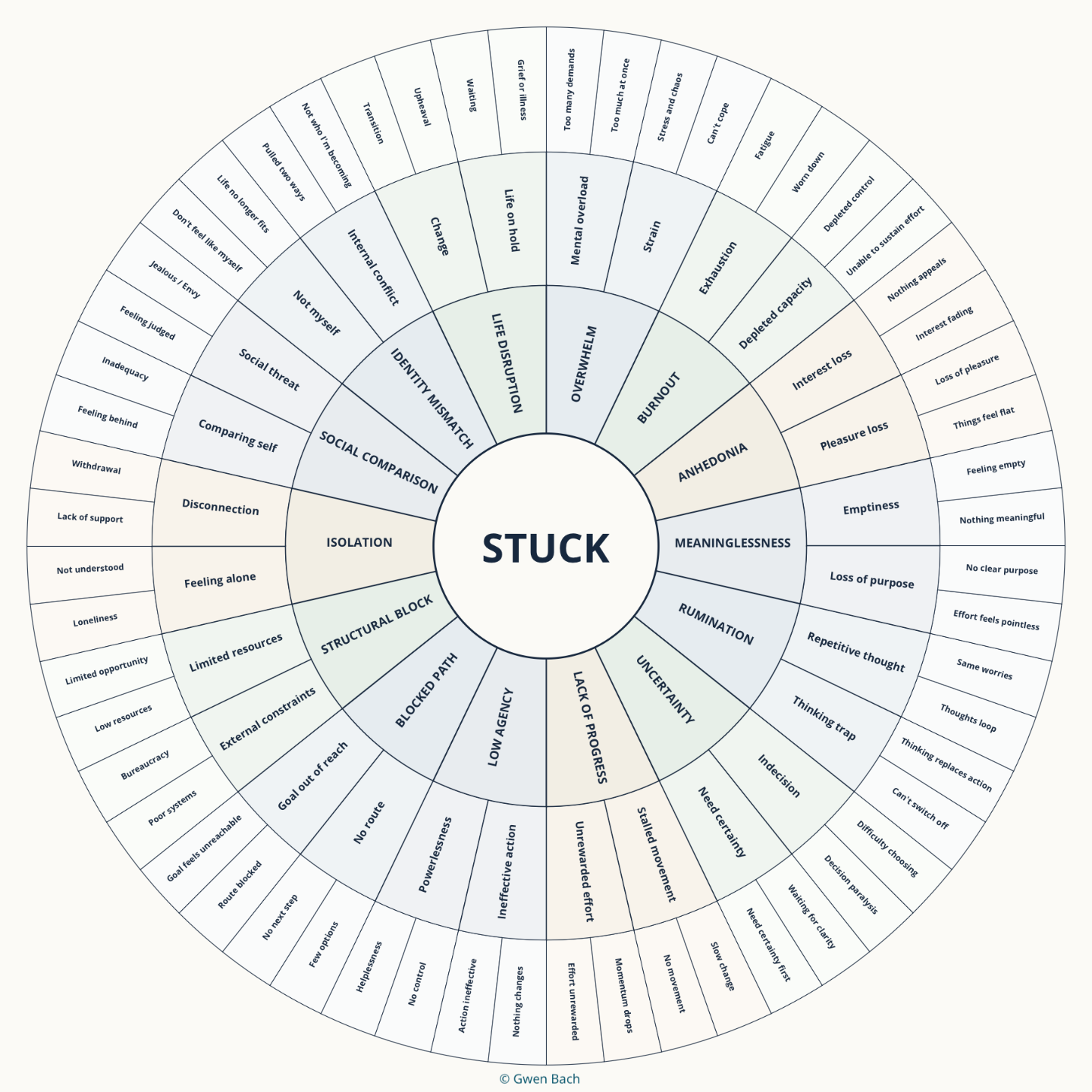
What may be contributing to that feeling?

Too much demanding your attention
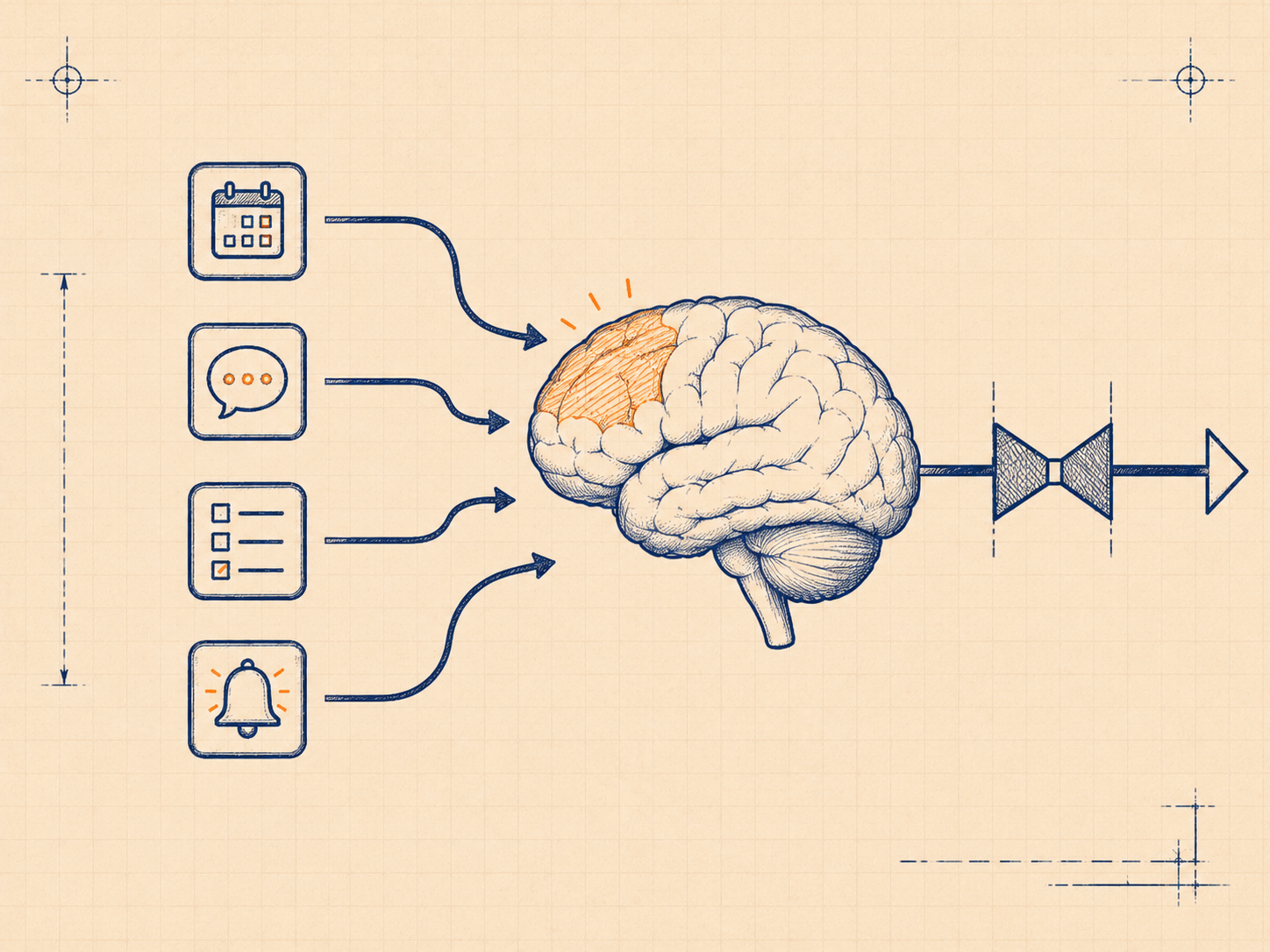
You sit down to do one thing while remembering five others. Work, family, messages and unfinished tasks keep pulling you in different directions. Staying busy is easy; finding space for what matters to you is harder.
Going round in circles
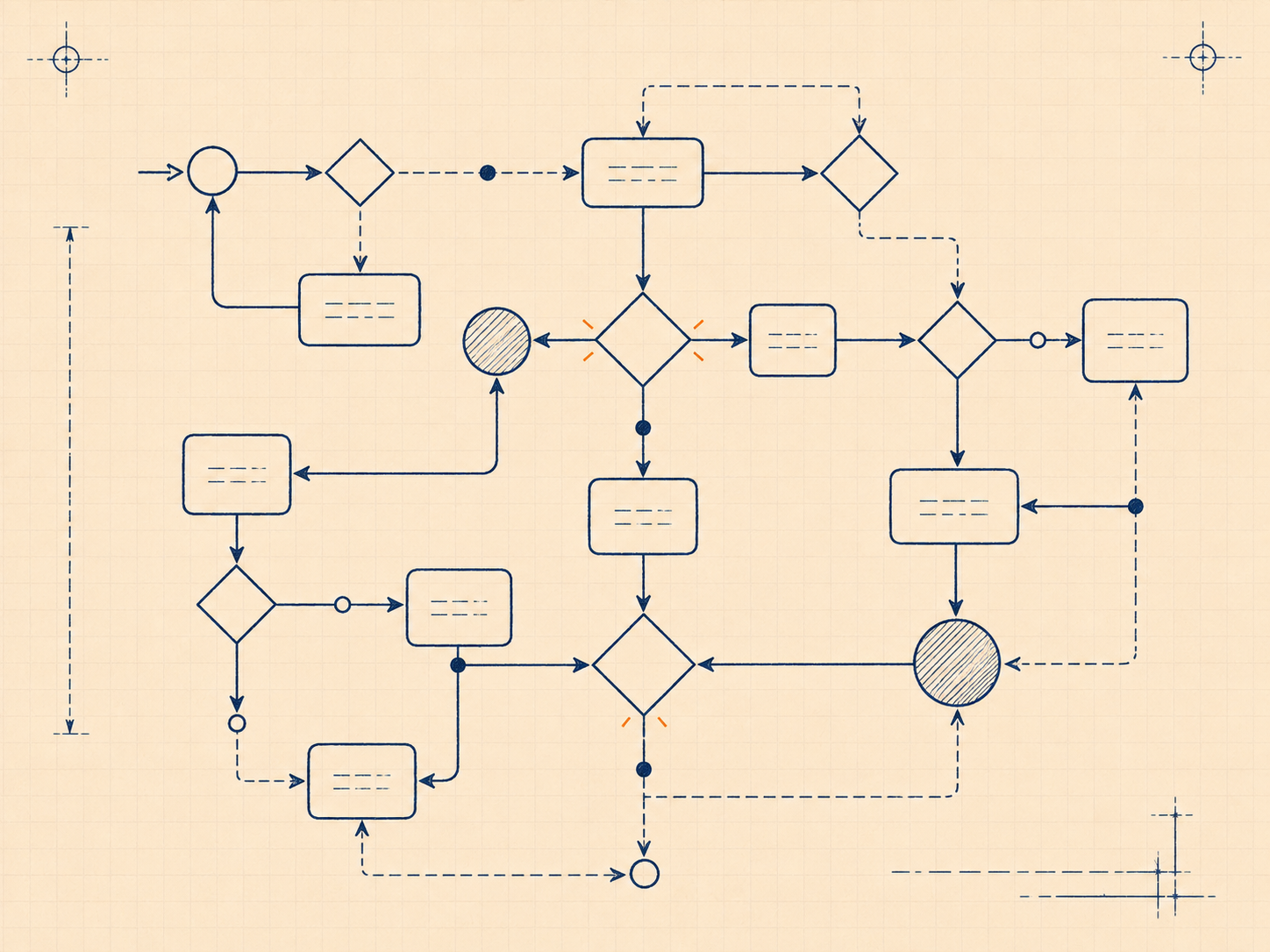
You replay conversations, reconsider options or search for another answer. Yet all that thinking leaves you no clearer about what to do. The same questions keep returning, taking up attention without helping you move forward.

Working hard. Seeing little progress.
You’re putting in time and effort, but the results aren’t following. Perhaps the approach isn’t working, or progress is difficult to see. After repeated setbacks, you start wondering whether anything you do will make a difference.
Too much outside your control
Your time, money, health or responsibilities may genuinely limit your options. When so much depends on circumstances you cannot change, it can become difficult to recognise the choices and influence you still have.

What used to fit no longer does
The work, routines or goals that once made sense may no longer reflect what matters to you. You know something needs to change, but working out what you want instead can feel like another overwhelming task.

Looking fine. Feeling anything but.
People see you working, caring for others and keeping life running. They assume you’re doing well. Meanwhile, you wonder why you’re struggling—and hesitate to say anything because your life looks good on paper.
Several of these may be happening together. You don’t need to fit neatly into one category.
Getting through the day doesn’t mean it isn’t costing you.
You keep meeting responsibilities. Meanwhile, the things you wanted for yourself keep moving to “later.”
Perhaps starting feels harder. You avoid something, feel briefly relieved, then return to the same problem with more frustration.
When repetitive negative thinking becomes part of the pattern, it can prolong distress and interfere with problem-solving. Research connects this process—called rumination—with both depression and anxiety.
These experiences deserve attention, even when you’re still functioning. You don’t have to wait until things become unmanageable to look for help.
Research on rumination and its consequences
How can this happen to a capable person?
You sit down to work. Someone needs you. A message arrives. You remember three unfinished tasks - and you haven’t started the first one yet.
Your ability to focus and follow through operates within those conditions. Stress can also affect the brain processes involved in holding information in mind and working with it.
That gives us something more useful to investigate than whether you’re “trying hard enough.”
Watch: Why capable people can feel stuck
Research on stress and working memory
Start with where you are.

1. Take stock
Put some structure around what you’re experiencing. What feels difficult? What keeps happening? What would you like to change?

2. Find what you can influence
Look at your circumstances, your resources and your obstacles. Separate what is outside your control from what you can work with.
3. Choose a manageable next step
Start with one small, meaningful problem. Plan an action, give yourself the support to take it, and review what happens.
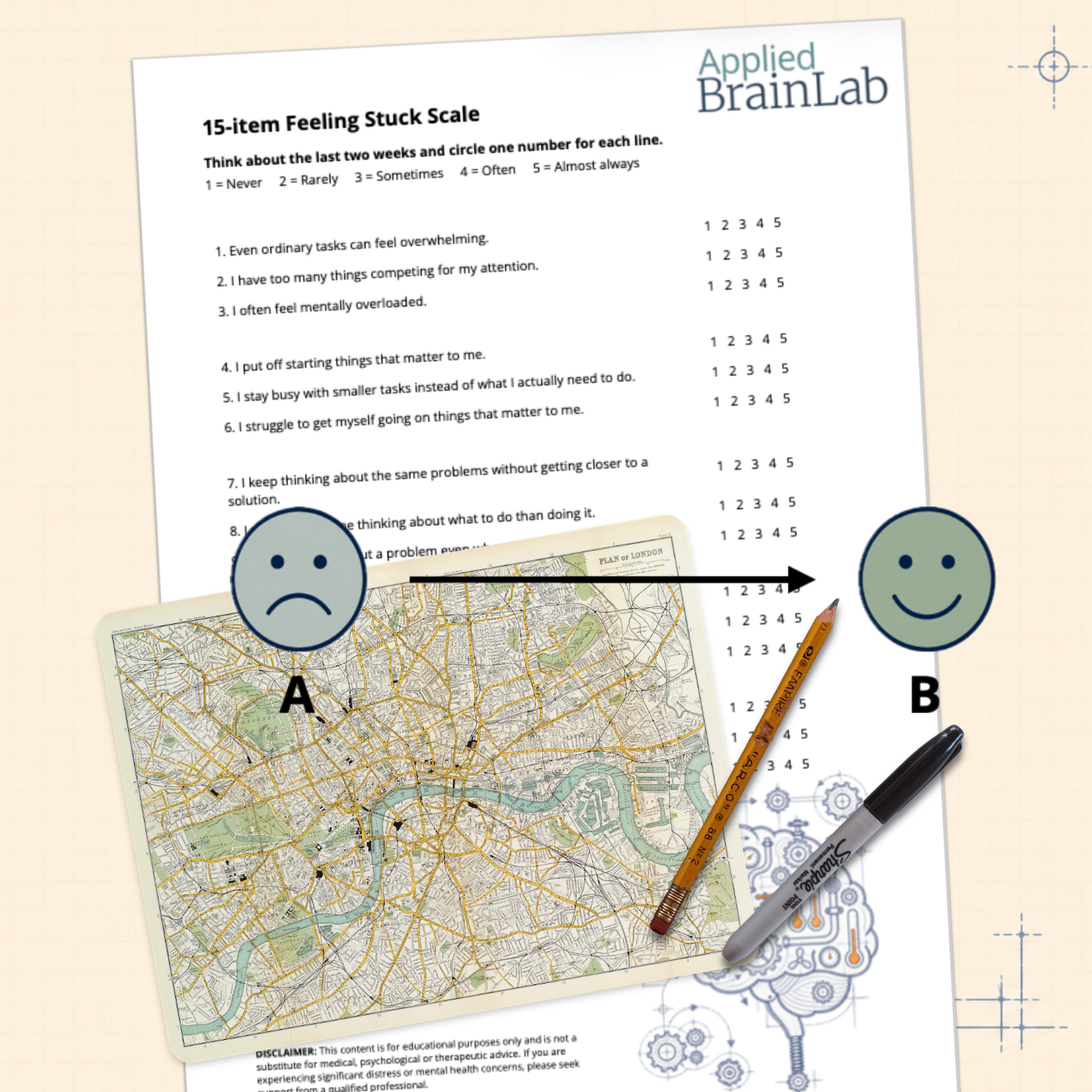
How stuck have you been feeling?
Get the free Feeling Stuck Check
When you can’t quite put your finger on what’s wrong, taking stock is a useful place to begin.
Inside the downloadable workbook:
- 15 questions about your experience over the past two weeks.
- A score you calculate yourself to get a clearer picture of how stuck you currently feel.
- A writing exercise to explore where you can direct your attention and effort.
Work through it privately, with pen and paper.
Free PDF workbook and a short email series to help you use it. Unsubscribe at any time. The check measures how stuck you feel. It doesn’t diagnose a condition or identify the cause.
Hi, I’m Gwen.
I’m an applied neuroscientist with a master’s degree in Applied Neuroscience, a former therapist, and the person behind Applied Brain Lab.
I also know what it’s like to be capable, busy and trying hard—and still wonder why you’re not getting anywhere. Even with my professional background, it took time to connect what I knew to what was happening in my own life.
Here, I turn research into explanations and tools you can use: to examine a pattern, think through a difficulty and decide what to try next.
MORE ABOUT ME
Give your next step some structure.
Get Unstuck
Learn to use my Goal Progress Map with one small, solvable problem.
Work out what you want, take stock of your resources and obstacles, and build a plan that includes the support you need to act.
$47 · Self-paced workshop · Immediate access
EXPLORE GET UNSTUCK -- $47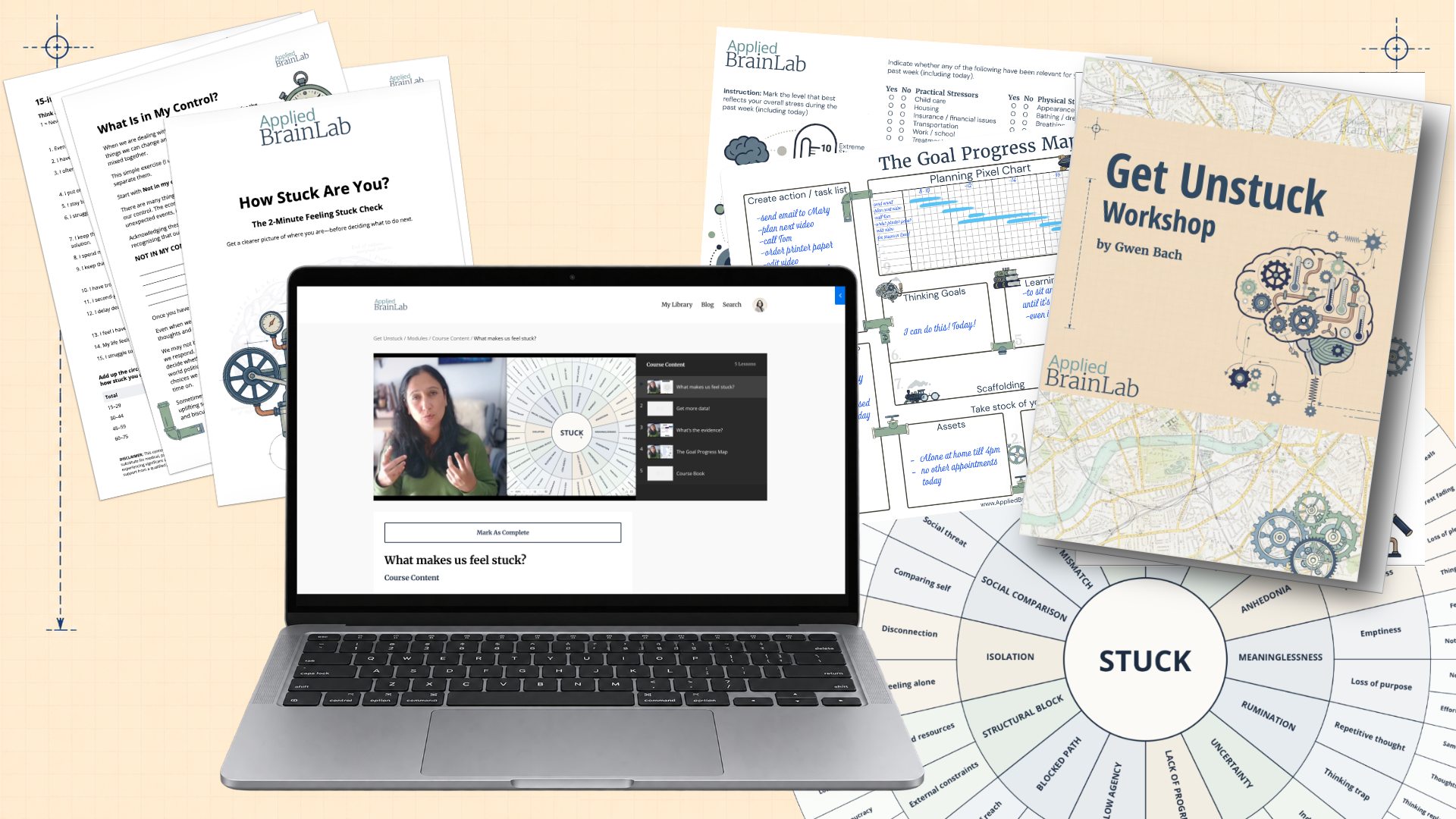
Explore the Lab
If you'd rather start by reading, you'll find evidence-based articles on some of the problems that can make us feel stuck.
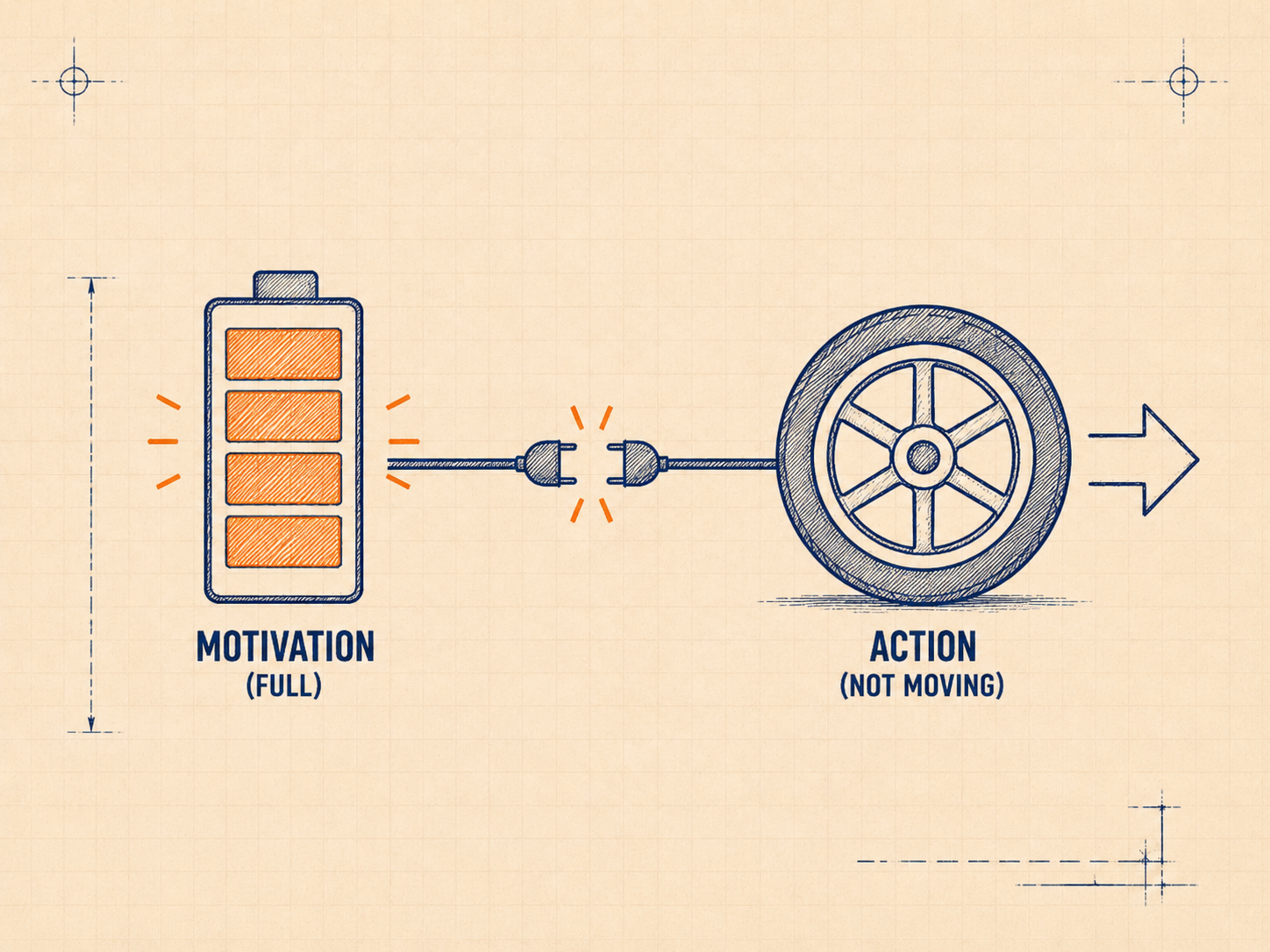
Why do I know what to do but still not do it?
What psychology and neuroscience can tell us about the gap between intention and action.
Why does everything feel harder when I'm overwhelmed?
What happens when demands start exceeding the resources we have available.
Why can't I stop overthinking?
A closer look at repetitive thinking—and what may help.
You don’t need to figure everything out today.
Start by getting a clearer picture of where you are.
Get the free Feeling Stuck Check and control exercise.
GET THE FREE FEELING STUCK CHECK